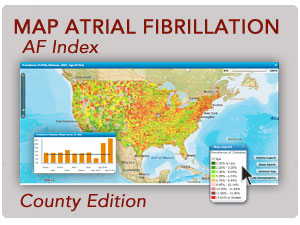
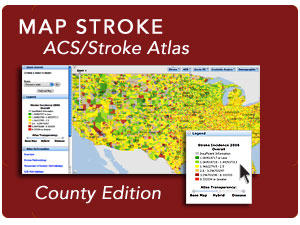
Atrial Fibrillation
Thursday, January 17th, 2013
Oxford Journals: January 3, 2013 OBJECTIVES Preoperative atrial fibrillation (PAF) has been associated with poorer early and mid-term outcomes after isolated valvular or coronary artery bypass graft surgery. Few studies, however, have evaluated the impact of PAF on early and mid-term outcomes after concomitant aortic valve replacement and coronary aortic bypass graft (AVR-CABG) surgery. METHODS Data obtained prospectively […]
Atrial Fibrillation
Thursday, January 17th, 2013
Content.onlinejacc.org: January 2013 Objectives We sought to assess the effect of atrial fibrillation (AF) on atrial thrombogenesis in humans by determining the impact of rate and rhythm. Background Although AF is known to increase the risk of thromboembolic stroke from the left atrium (LA), the exact mechanisms remain poorly understood. Methods We studied 55 patients with AF who underwent […]
Atrial Fibrillation
Thursday, January 17th, 2013
Content.onlinejacc.org: January 2013 Estimation of bleeding risk is a crucial step in the management of patients with atrial fibrillation (AF). Three bleeding risk–prediction schemes have been derived and validated exclusively in AF populations: HEMORR2HAGES, HAS-BLED, and ATRIA ((1),2). In the present analysis, the performance of these 3 schemes was tested in the idraparinux arm of the AMADEUS […]
Clinical Trials
Thursday, January 17th, 2013
CIRCULATIONAHA: January 16, 2013 Background—The multicenter PROTECT AF study was conducted to determine whether percutaneous left atrial appendage (LAA) closure with a filter device (Watchman) was noninferior to warfarin for stroke prevention in atrial fibrillation (AF). Methods and Results—Patients (n = 707) with nonvalvular AF and at least one risk factor (age > 75, hypertension, heart […]
Clinical Trials
Thursday, January 17th, 2013
Theincidentaleconomist: January 16, 2013 The British Medical Journal posted on their website, Clinical Evidence, the results of an analysis of randomized controlled trials focusing on harms and benefits of 3,000 medical treatments. The effectiveness of each treatment was rated based on six criteria: (a) beneficial, (b) likely to be beneficial, (c) trade-off between benefits and harms, (d) unlikely to […]
Clinical Trials
Thursday, January 17th, 2013
American College of Cardiology Foundation: January 14, 2013 Atrial fibrillation (AF) is the most common sustained arrhythmia1 and catheter ablation aiming to eliminate tissue critical to AF2 is found to be more effective than medications for its treatment.3-5 Nevertheless, many patients require multiple, lengthy, and costly ablation procedures that confer at least modest risk.2 AF ablation success is likely limited […]
Clinical Trials
Thursday, January 17th, 2013
STROKEAHA: January 10, 2013 Background and Purpose—Strokes have especially devastating implications if they occur early in life; however, only limited information exists on the characteristics of acute cerebrovascular disease in young adults. Although risk factors and manifestation of atherosclerosis are commonly associated with stroke in the elderly, recent data suggests different causes for stroke in the […]
Clinical Trials
Thursday, January 17th, 2013
STROKEAHA: January 10, 2013 Background and Purpose—Strokes have especially devastating implications if they occur early in life; however, only limited information exists on the characteristics of acute cerebrovascular disease in young adults. Although risk factors and manifestation of atherosclerosis are commonly associated with stroke in the elderly, recent data suggests different causes for stroke in the […]
Clinical Trials
Thursday, January 17th, 2013
STROKEAHA: January 10, 2013 ackground and Purpose—Although aspirin is effective in prevention of stroke, fewer studies have examined the impact of aspirin on stroke morbidity. Methods—The Women’s Health Study is a completed randomized, placebo-controlled trial designed to test the effect of low-dose aspirin and vitamin E in the primary prevention of cardiovascular disease and cancer, which […]
Therapies
Thursday, January 17th, 2013
STROKEAHA: January 10, 2013 Background and Purpose—Selective serotonin reuptake inhibitors (SSRIs) are widely prescribed after stroke. We aimed to investigate whether potential antiplatelet or vasospastic effects have important clinical implications. Methods—Using data from Danish medical registries, we did a nationwide follow-up study among ischemic stroke patients between 2003 and 2009. We identified 5833 SSRI users, and […]